
GUIDE · bingo plus
A free centre changes how many called numbers a bingo line needs
A five-cell bingo line can contain only four called numbers. On a 75-ball card with a free centre, that centre is already covered. A line passing through it therefore needs four numbered squares; a line that misses it needs five. Whether either line counts depends on the pattern announced for that game.
For the topic overview, see Detailed guides.
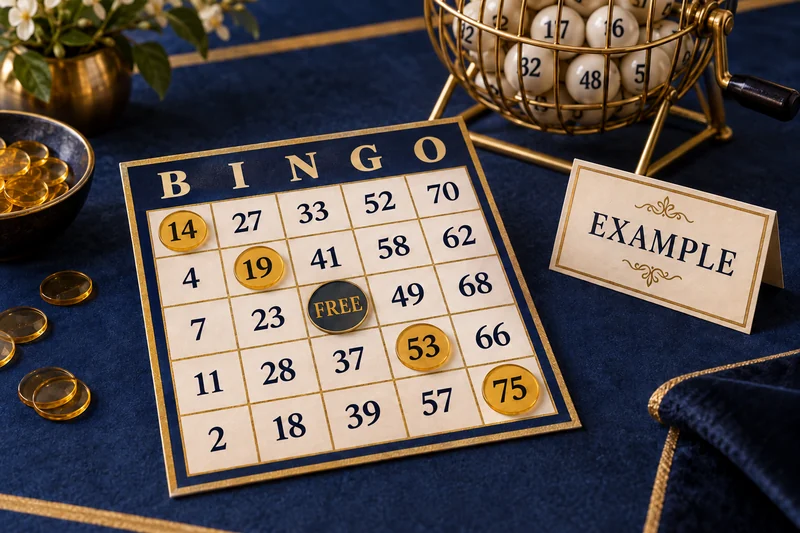
Count spaces and numbers separately
Mecca Bingo’s explanation of 75-ball bingo describes a five-by-five card with a free middle square. Its explanation is a useful source for this card format, not a statement about every bingo product or availability in the Philippines.
The centre occupies a position in a pattern but does not have a number waiting to be called. That is the small distinction behind a common counting mistake: five covered positions do not necessarily mean five successful number calls.
Two patterns on our example card
Look at a diagonal containing 14, 19, FREE, 53 and 75. If a qualifying diagonal is the announced target, the four numbered positions must all have been called. FREE is the fifth covered position. It is not an extra called ball.
Now look at the top row on the same example card: 14, 27, 33, 52 and 70. This row never touches the centre. It needs all five of those numbers to be called when that row is an eligible pattern.
| Example target | Covered positions required | Number calls needed for those positions |
|---|---|---|
| Diagonal through FREE | 5 | 4 |
| Top row, without FREE | 5 | 5 |
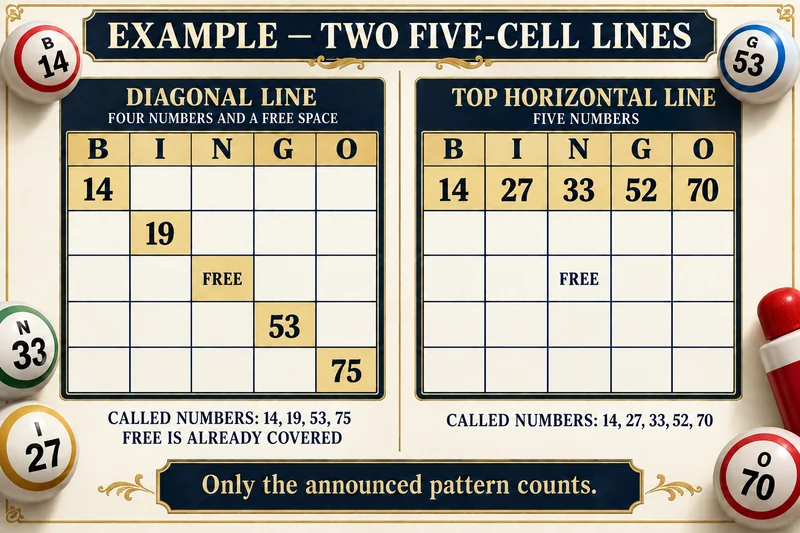
Four calls anywhere are not enough
Assume the called numbers include 14, 19, 53 and 70. Four numbered squares may be marked, but the illustrated diagonal is incomplete because 75 has not appeared. The 70 in the top-right corner cannot replace the missing bottom-right square.
That is why you compare positions with the target shape rather than count all marks on the card. Nor does a complete diagonal settle a game that requires a different pattern. A coverall, corners or another named shape asks a different question.
What this example can and cannot tell you
The comparison explains the number of called positions needed for two specified shapes. It does not calculate which pattern is more likely to win a particular session. That would also require the actual rules, competing cards, stopping condition and claim procedure. A free centre alone is not enough information.
If a screenshot looks complete, read the target pattern beside it and compare the full card against the calls. A crop that leaves out the pattern name cannot establish a valid claim.
The number-game and lottery guide helps separate these formats. For an ordered-number game, the three-digit sequence example explains why matching positions means something different. You can find both kinds of reading on bingo plus.
Source-based editorial research and original examples. Sources checked 2026-10-08.