
A repeated bingo notification does not mark a second square
Seeing B7 twice in a notification history does not create two B7 positions on a standard 75-ball card. A repeated display of the same call refers to the same number.
For the topic overview, see Detailed guides.
For a card check, count distinct called values that match distinct card cells. Keep notification count, unique calls and marked positions as separate totals.
Use the card format as the starting point
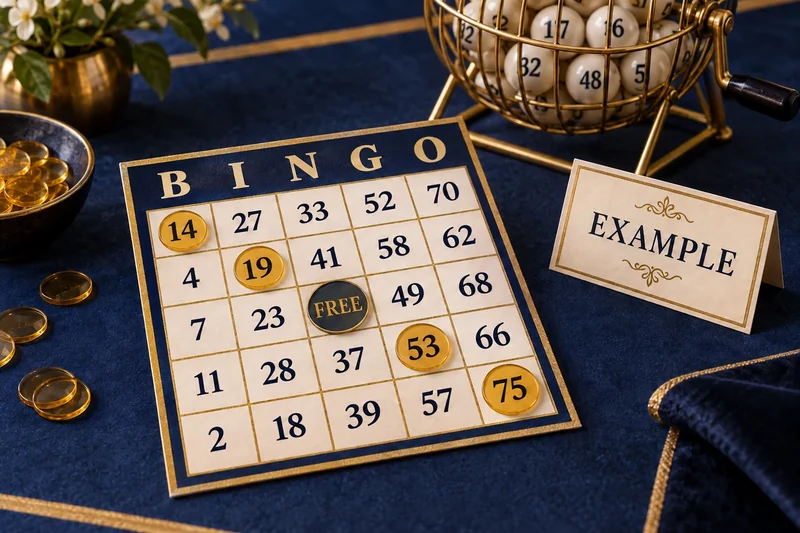
The Mecca Bingo format guide describes the familiar 75-ball BINGO card with numbered positions and a free center. The exercise here concerns a replayed or duplicated notification, not a claim that a draw machine legitimately selects the same ball twice.
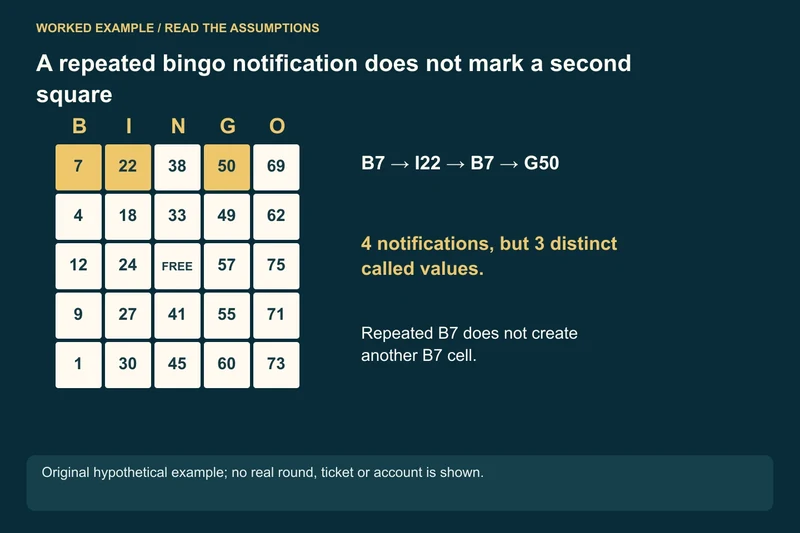
Assume our example card contains B7, I22 and G50. An on-screen notification list reads B7, I22, B7, G50. The second B7 is the same call displayed again. We are not asserting why it was repeated.
Count events and identities separately
| Record being counted | Items | Count |
|---|---|---|
| Visible notifications | B7, I22, B7, G50 | 4 |
| Distinct called values | B7, I22, G50 | 3 |
| Matching numbered card cells | The one B7, one I22 and one G50 position | 3 |
A duplicate notification adds a row to the display history but no new called value. Marking B7 again does not move the mark to another square or turn one covered position into two. The card’s free center is also a separate position, not another occurrence of B7.
Identity matters more than the text’s position
A call may appear in a current-call banner, a scrolling history and a replay panel. Those locations can display one event several times. Count by the defined call identity, not by the number of interface components showing it.
If two records conflict rather than duplicate, preserve both and check the authoritative round history. Silently deleting the inconvenient row would conceal an unresolved question. Deduplication is justified here only because the example explicitly states that the repeated B7 refers to the same call.
A pattern still needs its own check
Three matching values do not by themselves establish a winning pattern. The positions must satisfy the announced pattern and any game conditions. A full-house, line or other shape cannot be declared merely from the number of notifications.
Keep the card, round identifier, call history and displayed pattern together. The small three-count worksheet helps explain a record; it does not certify a real claim, invent a missing call or advise continuing until a pattern appears.
The bingo plus homepage brings together the site’s other reading topics.
Source-based editorial research and original examples. Sources checked 9 October 2026. No real-money play or account transaction was performed for this article.