
The number matches, does the order also match? Reading in 3D and Lotto 6/42
Seeing the same digits is not enough. Their order and the number of occurrences of each digit may matter. Match the game, draw and entry type before comparing the numbers.
For the topic overview, see Does the feature-entry option cost extra?.
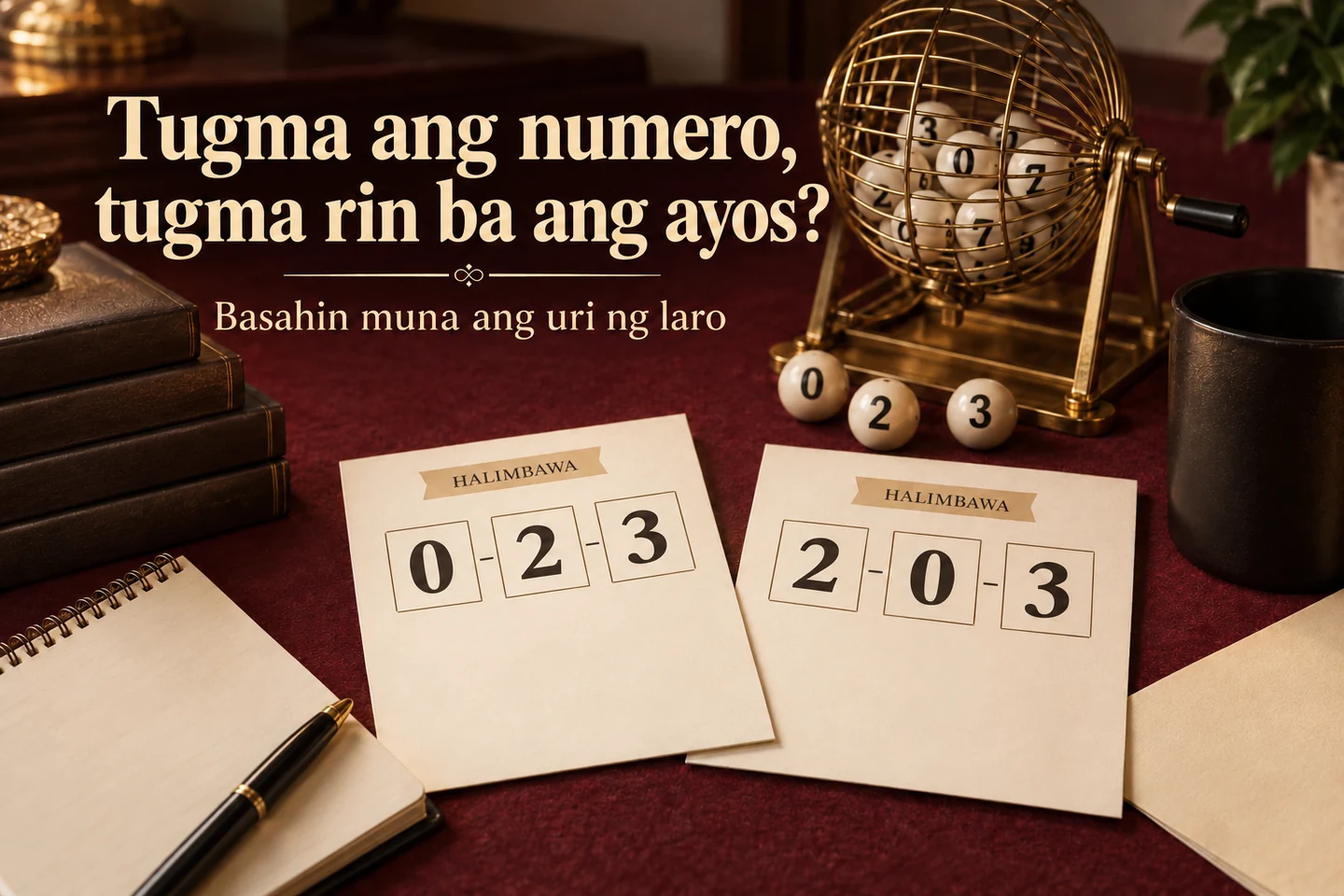
You see 2–0–3 on a result card, but your note says 0–2–3. It’s easy to say “three numbers are the same.” That’s correct as a number of digits, but lacking as an entry check. Not all games use the same matching method.
This is the specific guide question: what should be kept when copying or adjusting the number record? We have a small worksheet for order, repeating digits and six different numbers. All combinations here are our own examples, not live results, predictions or betting recommendations.
The game name and matching rule are separate
In LottoMatik Game Manual, January 2026, page 6 (8th page of the PDF), 3D Standard Play matches the exact order. In Rambolito, the order may be different. It also describes the three digits from 0 to 9 and the possibility of repeated digits. This is the basis of the difference between the modes; not all entries labeled 3D are the same.
In page 11 of the same manual (PDF page 13), six different numbers from 1 to 42 are the Standard Play in Lotto 6/42, and the same order is not required. The manual is linked to LottoMatik downloads when we checked. Only matching rules are discussed here, not current prices, prizes or deadlines.
This does not imply that this website has ticketing, account service or official affiliation with PCSO. The bingo plus on scatterphapp.com is the name of the guide site. For a real ticket, the actual game, entry type and draw must still match the record being checked.
Worksheet: which are really the same?
In each row below, it is assumed for example only that the two records have the same draw identity. “match” is comparing the number to the specified rule, not validating a genuine ticket or awarding a prize.
| Type in the example | First record | Second record | What is preserved? | Reading |
|---|---|---|---|---|
| 3D Standard | 0–2–3 | 2–0–3 | Same digits, different first two positions | Does not match exact order |
| 3D Rambolito | 0–2–3 | 2–0–3 | A 0, a 2, a 3 in each record | Group of digits match |
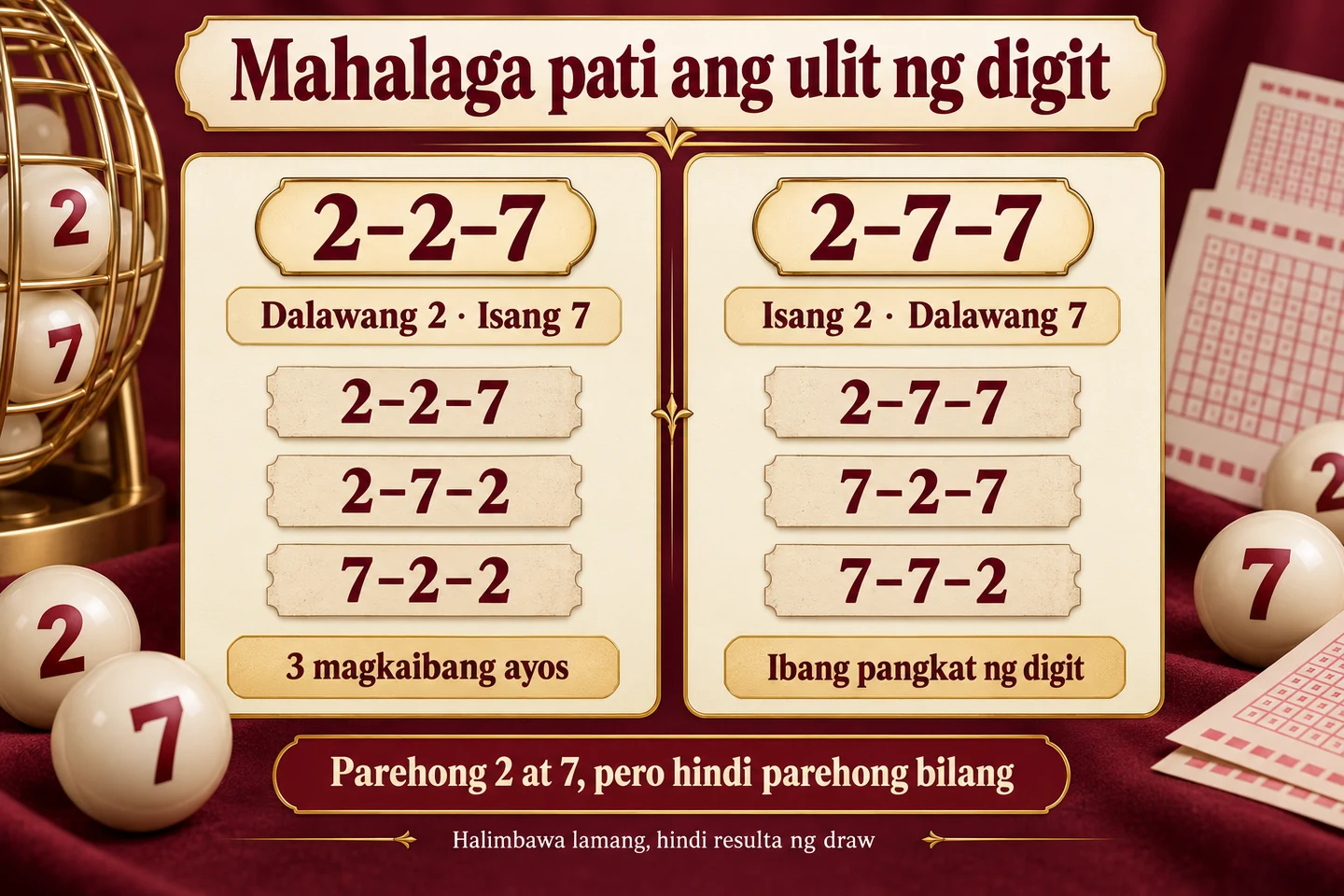
| 3D Rambolito | 2–2–7 | 2–7–2 | Two 2’s and a 7’s in each record | Group of digits match |
| 3D Rambolito | 2–2–7 | 2–7–7 | 2 and 7 are different numbers | The group is not compatible |
| Lotto 6/42 Standard | 5, 11, 19, 24, 33, 41 | 41, 24, 5, 33, 19, 11 | Both are six different numbers | The set is compatible even though the order is different |
The first two rows are the reason why the mode needs to be included in the copied record. The two sets of digits look the same, but the question is different: is an exact position or group of digits being compared? If the entry type is not written, there is insufficient information to select a row.
Why is the list of unique digits not enough?
In 2–2–7, 2 appears twice. In 2–7–7, 7 appears twice. When you erase the duplicates and leave only “2, 7,” the important contrast is lost. So sorting can help group analysis, but removing duplicates is the wrong step for these examples.
Sort out the place of the lone 7 in 2–2–7: back, middle or front. Get the 2–2–7, 2–7–2 and 7–2–2. That’s three different arrangements. By simply swapping the two 2’s, you have no new visible sequence. This is a self-enumeration, confirmed by calculation; it is not a record of the numbers that appear.
For three different digits 0, 2 and 3, our list is 0–2–3, 0–3–2, 2–0–3, 2–3–0, 3–0–2 and 3–2–0. Six different sequences. Both lists are used to determine if a record is duplicated or lost. This is no reason to expect any of these to appear next, and it is not automatically a six-fee or six-payout: we have no cost calculation here.
Copy the original first before creating a sorted version
Keep two columns in own notes: original display and comparison copy. At first, do not change the order, leading zero or separators. In the second, enter the change made and reason. For example, 41, 24, 5, 33, 19, 11 can be sorted to compare with the six numbers in the first record, but still keep the original.
Use clearly spaced numbers. “05” in a six-number list is the number 5 with padding; it’s not two separate selections of 0 and 5. In the three-digit record 0–2–3, the first 0 is part of three positions. When converting the ordinary integer 23 into a spreadsheet, it’s no longer clear what original format you’re holding. Save the record as text first if the format is not yet certain.
There is also a simple consistency check in our six-number example: first count if there are six entries and six are different. When the copy is 5, 11, 19, 24, 33, 33, there are six entries but only five distinct numbers. That’s a possible transcription error; it should not be “fixed” by predicting that 41 are missing. Go back to the original record.
When holding only a screenshot, what can be decided?
If only digits are visible, you can describe the sequence or number of times. You still can’t tell which matching rule to use. Find the full game name, draw date and session, entry type, and record origin. When it turns out to be a different draw, none of the matches on the worksheet are enough.
If there is a conflicting copy, note the exact difference and open the source instead of choosing a more favorable version. The example here is to identify a reading problem; actual settlement depends on valid ticket and corresponding official process.
From lottery hub, use this guide when the question is number and order. Naa bingo plus homepage the other game formats, and nasa library of guides related topics. If there is an incorrect explanation or broken source link in the article, please notify the URL and heading at online Contact; do not send the full ticket barcode, password or private account details.